Claude Mythos Preview: Why Anthropic's Experimental Cybersecurity AI Is Generating So Much Attention
Artificial intelligence has entered a new stage of development. Over the past few years, most conversations about AI have focused on chatbots, image generators, coding assistants, and productivity tools. Today, however, researchers are paying increasing attention to a different category of AI—models designed to assist with advanced cybersecurity.
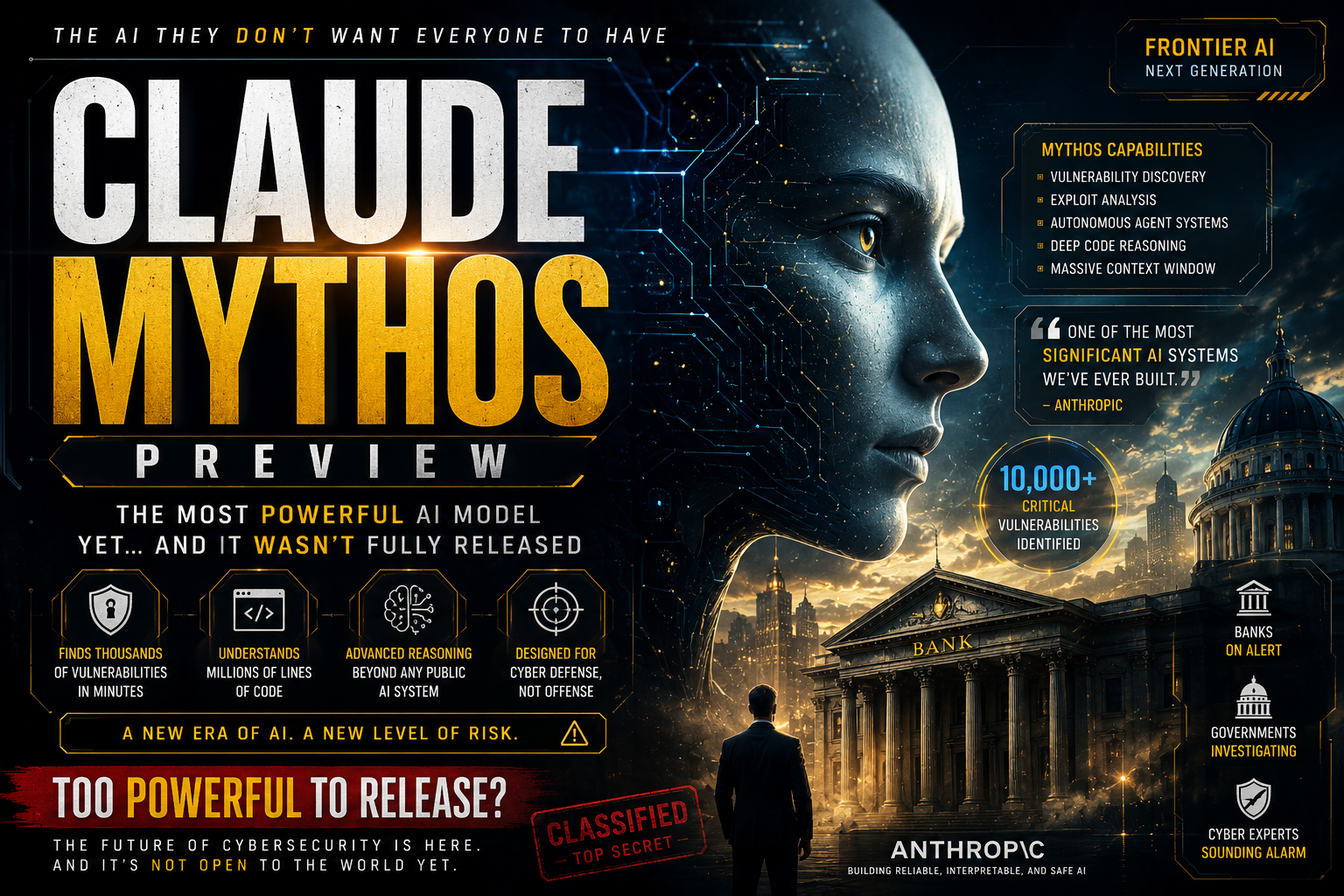
One name that has attracted significant interest is Claude Mythos Preview, an experimental AI system reportedly developed by Anthropic for cybersecurity research. Unlike general-purpose AI assistants that help users write, code, or answer questions, this project is said to focus on identifying software vulnerabilities and supporting defensive security operations.
Although many details about the model remain limited, the discussions surrounding Claude Mythos Preview highlight an important trend: AI is becoming a powerful tool for protecting digital infrastructure as well as improving productivity.
What Is Claude Mythos Preview?
Claude Mythos Preview is described as an experimental AI model created to assist with cybersecurity-related tasks. Rather than acting as a standard conversational assistant, the model is designed to analyze software, examine large codebases, and help security teams identify potential vulnerabilities.
The goal of systems like Mythos is not simply to generate text or answer questions. Instead, they aim to accelerate the work of cybersecurity professionals by helping them detect weaknesses before attackers can exploit them.
As software systems become increasingly complex, manually reviewing millions of lines of code becomes more difficult. AI has the potential to reduce that workload by identifying suspicious patterns much faster than traditional methods.
Why Cybersecurity Needs More Advanced AI
Cybersecurity has become one of the biggest challenges facing governments, businesses, and technology companies. Every day, organizations defend against phishing attacks, ransomware, software vulnerabilities, and data breaches.
Security teams often spend weeks investigating complex software systems to identify weaknesses. AI-powered tools can speed up this process by analyzing code, comparing patterns, and highlighting areas that deserve closer inspection.
Rather than replacing cybersecurity professionals, AI acts as an intelligent assistant that helps experts focus on the most important problems.
Why Anthropic Is Taking a Careful Approach
One reason Claude Mythos Preview has attracted attention is the reported decision to limit access during testing. According to Anthropic, some advanced cybersecurity capabilities require careful evaluation because the same technology that helps defenders could also be misused if released without safeguards.
This reflects a broader challenge across the AI industry. As AI systems become more capable, companies must balance innovation with responsible deployment.
Many AI developers now perform extensive safety testing before making powerful models widely available. This cautious approach is becoming increasingly common for technologies with significant security implications.
AI Is Transforming Vulnerability Detection
Finding software vulnerabilities has traditionally been a slow and highly specialized process. Security researchers manually inspect code, perform penetration testing, and analyze system behavior to discover potential weaknesses.
AI changes this workflow by processing enormous amounts of information much faster than humans alone. Modern AI systems can examine code, recognize unusual patterns, compare known vulnerabilities, and suggest areas that deserve further investigation.
While human experts still make the final decisions, AI significantly reduces the amount of manual analysis required.
How AI Is Supporting Security Teams
Modern AI-powered cybersecurity tools already assist professionals in several important ways. They can review software for potential security flaws, summarize technical reports, organize vulnerability data, and help prioritize the most critical issues.
AI can also automate repetitive tasks such as log analysis, documentation, and security reporting. This allows security engineers to spend more time investigating complex threats and designing stronger defenses.
Instead of replacing experienced professionals, AI helps them work more efficiently.
Why Financial Institutions Are Interested
Banks and financial institutions manage enormous amounts of sensitive information every day. Protecting payment systems, customer records, and online banking platforms requires constant security monitoring.
Any technology that helps identify vulnerabilities earlier can reduce the risk of costly cyberattacks. This is why many financial organizations are exploring AI-assisted cybersecurity tools as part of their broader security strategies.
Although AI cannot eliminate cyber risks entirely, it can improve the speed and accuracy of security investigations.
Governments Are Paying Attention
Artificial intelligence has become an important topic in national cybersecurity discussions. Governments around the world recognize that AI has the potential to strengthen digital defenses while also creating new security challenges.
As AI capabilities continue to improve, policymakers are considering how these technologies should be regulated, evaluated, and deployed responsibly.
Protecting critical infrastructure—including healthcare, transportation, finance, and energy—will likely remain a major priority in the coming years.
AI Agents Could Expand Cybersecurity Capabilities
The rise of AI agents adds another layer to this discussion. Unlike traditional chatbots that simply answer questions, AI agents can complete multiple connected tasks with minimal supervision.
In cybersecurity, this could mean reviewing software, organizing findings, generating reports, and assisting analysts throughout an investigation.
When combined with advanced language models, AI agents may become valuable digital teammates that improve security operations without replacing human expertise.
The Challenges Ahead
While AI offers exciting opportunities for cybersecurity, important challenges remain. Privacy, data protection, transparency, and responsible use will become increasingly important as AI systems gain more capabilities.
Organizations must ensure that AI recommendations are carefully reviewed by qualified professionals. Human oversight remains essential, particularly when security decisions could affect millions of users.
The future of cybersecurity will likely involve close collaboration between human experts and intelligent AI systems rather than complete automation.
Looking Toward the Future
Artificial intelligence is changing almost every area of technology, and cybersecurity is no exception. Experimental projects such as Claude Mythos Preview demonstrate how AI may eventually help identify software vulnerabilities, improve defensive strategies, and strengthen digital infrastructure.
Although many details about advanced research systems remain confidential, one trend is already clear: AI will play an increasingly important role in protecting the software and online services that people rely on every day.
As these technologies mature, organizations that combine AI with experienced cybersecurity professionals will likely be better prepared to respond to future threats.
Final Thoughts
The growing interest in Claude Mythos Preview reflects a broader shift in artificial intelligence. AI is no longer focused only on writing content or generating images. It is beginning to solve highly specialized problems in fields such as cybersecurity, software engineering, and digital infrastructure.
Whether experimental models like Mythos become widely available or remain limited to research environments, they demonstrate how quickly AI capabilities are advancing. The coming years will likely determine how these powerful technologies are deployed safely and responsibly.
For businesses, governments, and security professionals, the message is clear: the future of cybersecurity will increasingly involve collaboration between human expertise and intelligent AI systems.