AI Agents Explained: How Intelligent AI Is Transforming Everyday Technology in 2026
Artificial intelligence has evolved at an incredible pace over the last few years. What began as simple chatbots and text generators has now developed into something much more powerful. In 2026, AI is entering a new era where it doesn't just answer questions—it can plan, make decisions, and complete tasks with very little human guidance.
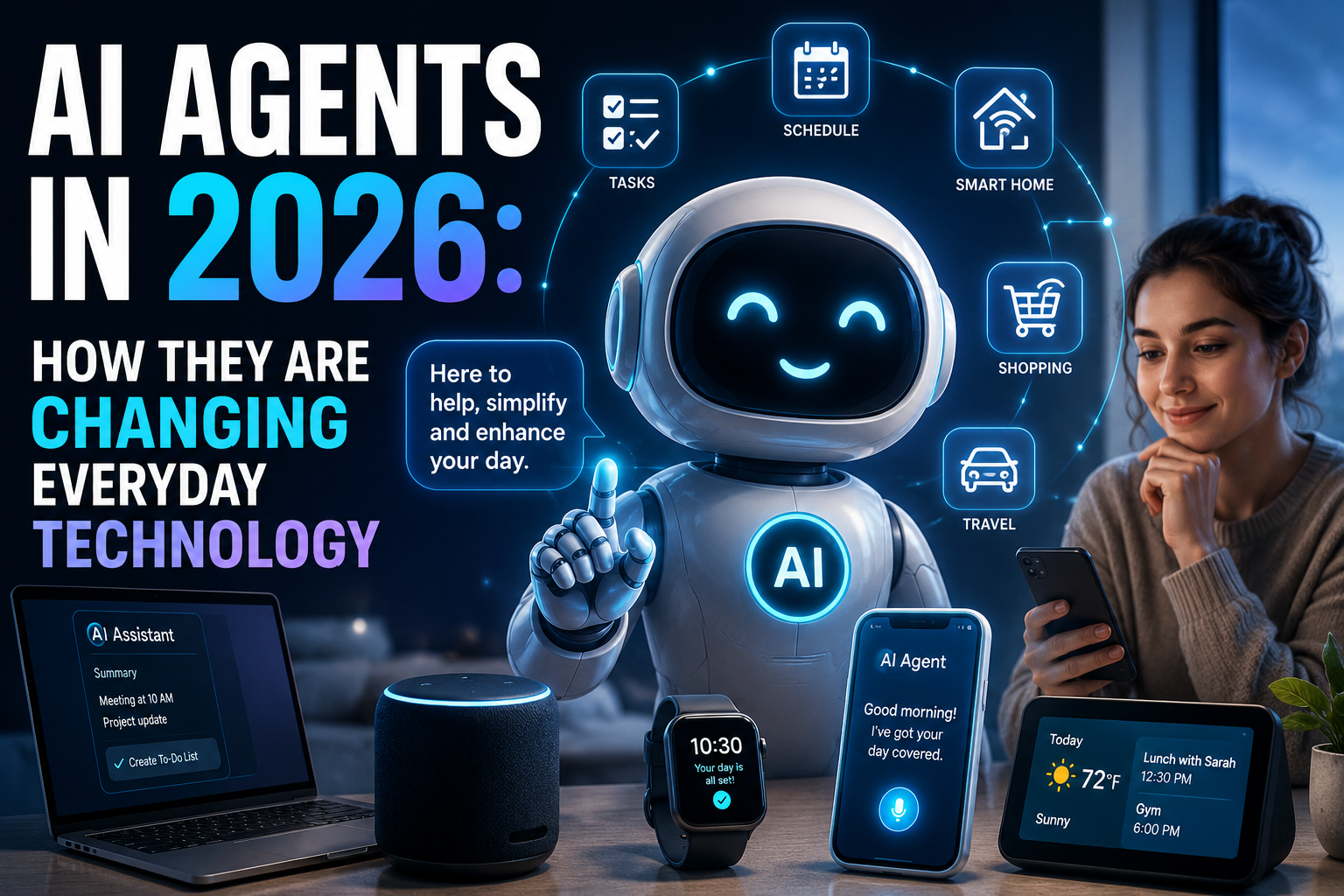
These advanced systems are known as AI agents, and they are quickly becoming one of the biggest innovations in modern technology. From smartphones and business software to online shopping and education, AI agents are changing the way people interact with digital tools.
Many technology experts believe this shift could have an impact similar to the rise of smartphones or cloud computing. Instead of opening multiple apps and performing every task manually, users are beginning to rely on intelligent systems that can understand goals and complete entire workflows automatically.
What Is an AI Agent?
An AI agent is an intelligent software system designed to understand objectives, make decisions, and perform tasks on behalf of a user. Unlike traditional AI assistants that simply respond to questions, AI agents can complete multiple connected actions without requiring constant instructions.
Imagine planning a vacation. A traditional chatbot might answer questions about flight prices or hotel availability. An AI agent, however, could search travel websites, compare prices, recommend destinations based on your preferences, book flights, reserve hotels, add events to your calendar, and even remind you when it's time to check in.
This ability to connect several tasks into one seamless workflow is what makes AI agents different from previous generations of artificial intelligence.
Why AI Agents Are Different from Traditional AI
Earlier AI systems were designed mainly to generate text, answer questions, or provide suggestions. They depended on users to decide what happened next.
AI agents go much further by taking action. They can interact with software, organize information, automate repetitive work, and complete tasks with minimal supervision.
Instead of asking several separate questions, users simply describe what they want to accomplish. The AI agent then determines the necessary steps and carries them out automatically.
This represents a major shift in how people use technology. Rather than learning how software works, users simply communicate their intentions while AI handles much of the execution.
AI Agents Are Coming to Smartphones
Smartphones are gradually evolving into AI-first devices. For years, digital assistants were mainly limited to setting alarms, checking the weather, or answering simple voice commands.
Modern AI agents are capable of much more. They can summarize notifications, organize schedules, recommend daily priorities, draft replies to messages, and automate routine tasks throughout the day.
Instead of opening multiple applications to complete different activities, users may soon rely on conversational AI that coordinates everything behind the scenes. This creates a simpler and more efficient mobile experience while reducing the need to navigate through dozens of apps manually.
Everyday Applications Are Becoming Smarter
Many of the apps people already use every day are beginning to integrate AI agents directly into their platforms. Productivity software, writing assistants, customer support systems, shopping platforms, and coding environments are all becoming more intelligent.
These AI systems learn user preferences over time, automate repetitive actions, and provide personalized recommendations based on previous behavior.
For example, a productivity app might automatically organize tasks based on upcoming deadlines, while an online shopping assistant could compare products, track prices, and recommend the best purchasing options without requiring manual research.
This trend is making digital experiences faster, more personalized, and increasingly automated.
AI Agents Are Transforming Software Development
One of the industries experiencing the fastest adoption of AI agents is software development. Modern AI coding assistants can generate code, explain programming concepts, identify bugs, optimize performance, and even create complete project structures from simple instructions.
Developers still play an essential role in designing software architecture and solving complex problems, but AI agents eliminate many repetitive programming tasks that previously consumed valuable time.
This allows software engineers to focus more on creativity, innovation, and problem-solving while increasing overall development speed.
As AI-powered coding continues to improve, even beginners are finding it easier to learn programming and build functional applications.
Businesses Are Creating Digital Employees
Companies around the world are experimenting with AI agents as digital workers capable of handling routine business operations.
These intelligent systems can organize schedules, summarize meetings, generate reports, analyze data, manage documentation, respond to customer inquiries, and automate administrative workflows.
By handling repetitive work, AI agents free employees to concentrate on higher-value activities such as strategic planning, customer relationships, and decision-making.
Small businesses also benefit because they can accomplish more without significantly increasing staffing costs.
AI Is Personalizing Education
Education is another field experiencing significant changes through AI agents. Traditional online learning platforms often provide the same lessons to every student regardless of individual learning styles.
AI tutoring systems can adapt explanations based on each student's progress, create personalized quizzes, summarize lessons, answer questions instantly, and recommend additional study materials where needed.
This personalized learning experience helps students understand difficult concepts more effectively while allowing teachers to spend more time supporting individual learners instead of managing repetitive administrative tasks.
As AI continues to improve, educational experiences are expected to become increasingly interactive and accessible.
The Future of Search Is Changing
Search engines are evolving from information directories into intelligent assistants.
Instead of browsing through dozens of websites to gather information, users increasingly expect direct answers, summarized research, and practical recommendations.
AI agents combine search capabilities with reasoning and automation. Rather than simply displaying search results, they analyze information, compare sources, organize findings, and help users complete tasks based on those results.
This shift is changing how people interact with the internet and reducing the time required to find useful information.
Helping Content Creators Work More Efficiently
Content creators are also embracing AI agents to simplify production workflows. Writing articles, editing videos, creating thumbnails, planning social media campaigns, and optimizing content for search engines can now be completed much faster with AI assistance.
Rather than replacing creativity, AI handles repetitive production tasks while allowing creators to focus on storytelling, audience engagement, and original ideas.
Independent creators can now produce content at a scale that previously required entire teams, opening new opportunities for freelancers, educators, marketers, and entrepreneurs.
Challenges and Ethical Considerations
Despite the excitement surrounding AI agents, important concerns remain. Because these systems often interact with personal information, privacy and data security have become major priorities.
There are also questions about transparency, accountability, misinformation, and over-reliance on automated decision-making. Organizations developing AI agents must ensure that these systems operate responsibly and protect user data.
Governments, technology companies, and researchers continue working on guidelines that encourage innovation while reducing potential risks associated with increasingly autonomous AI.
How AI Agents Will Shape the Future of Work
The workplace is expected to change significantly as AI agents become more capable.
Instead of spending hours on repetitive administrative tasks, professionals may supervise teams of AI agents that manage documentation, scheduling, research, reporting, and communication.
Human workers will increasingly focus on creativity, leadership, strategic thinking, collaboration, and complex decision-making—areas where human judgment remains essential.
Learning how to work effectively with AI will likely become one of the most valuable career skills over the next decade.
Final Thoughts
Artificial intelligence has entered a new stage of development. AI agents are no longer experimental technologies limited to research laboratories. They are becoming practical tools that help people complete meaningful work every day.
From smartphones and education to software development and business automation, intelligent AI systems are reshaping digital experiences at an extraordinary pace. Their ability to understand goals, automate workflows, and assist with complex tasks represents one of the most significant technological shifts of the modern internet era.
While challenges such as privacy, security, and responsible AI use still need careful attention, the overall direction is clear. AI agents will become an increasingly important part of everyday life, helping individuals and organizations work more efficiently than ever before.
As this technology continues to evolve, those who learn how to collaborate with AI—not compete against it—will be best prepared for the future.