Most apps come and go quietly. People download them for a few weeks, lose interest, and move on.
WhatsApp was never really like that.
Over the years, it slowly became woven into daily life in a way very few apps ever manage. It’s where family photos arrive first. College project groups somehow survive there. Apartment notices appear there before email. Small businesses depend on it. Office updates travel through it. Even people who barely use social media still open WhatsApp several times a day without thinking about it.
That’s exactly why recent reports around Meta potentially expanding premium or paid-style features across WhatsApp, Instagram, and Facebook created such strong reactions online.
The reaction wasn’t just about money. It felt more emotional than that.
For many users, especially in India, these apps stopped feeling optional a long time ago.
### What the Reports Actually Suggest
A lot of headlines online made the situation sound more dramatic than it currently appears.
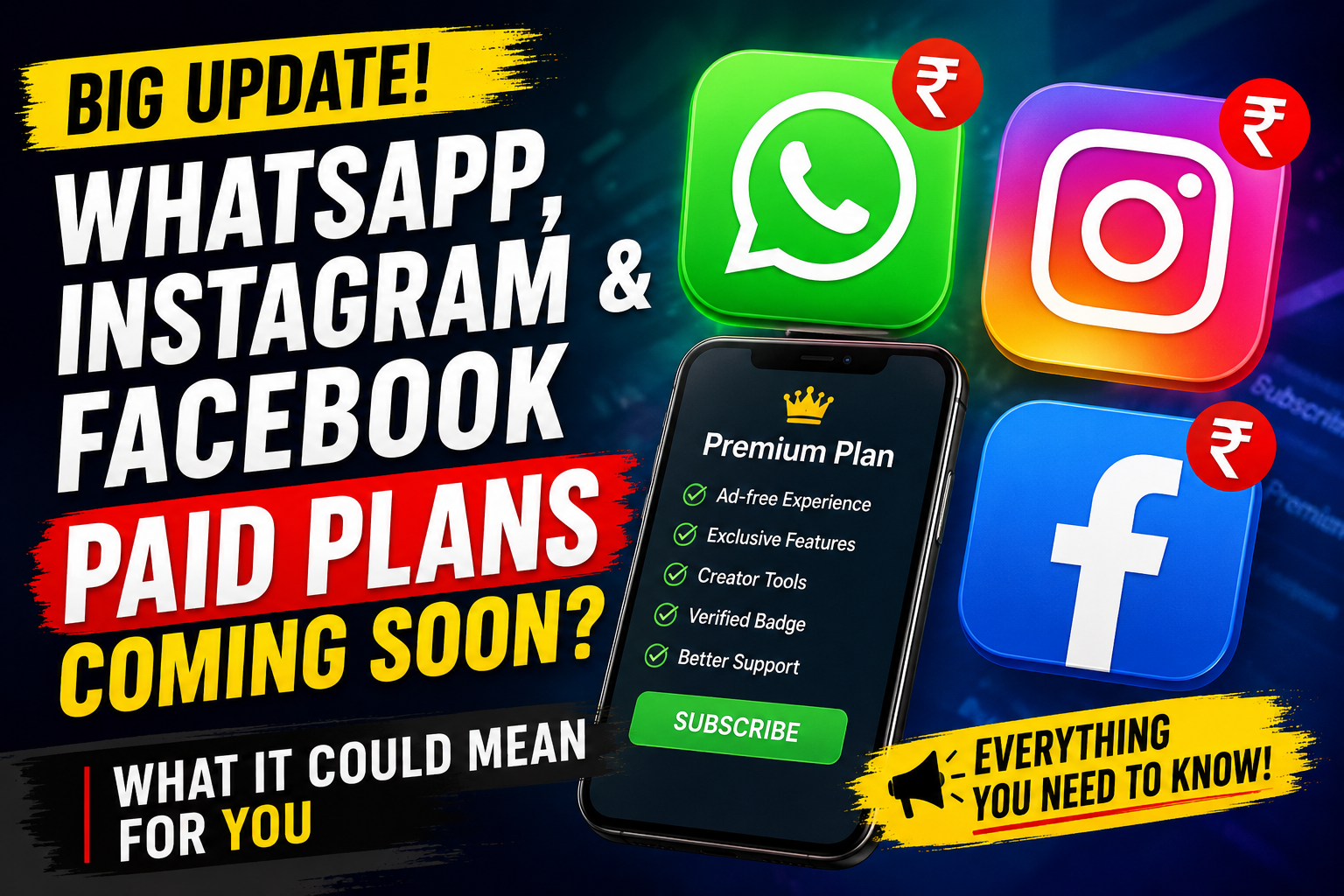
According to recent reports from technology publications, Meta appears to be exploring or gradually expanding optional subscription-style features tied to: - WhatsApp - Instagram - Facebook
Some reports mention possible monthly pricing for: - ad-free experiences - creator tools - verification systems - AI-powered features - premium business services - advanced customization options
However, one important detail often gets lost once screenshots and viral posts start spreading online:
There is currently no strong evidence suggesting normal WhatsApp messaging is suddenly becoming fully paid for regular users.
That distinction matters.
The phrase “paid WhatsApp” immediately creates panic because people imagine losing access to something that has become deeply integrated into daily communication. But most current discussions appear focused on optional premium layers rather than basic access itself.
## Why Users React So Emotionally to WhatsApp News
Instagram already feels commercial.
People expect: - influencer promotions - sponsored reels - paid verification - ads between stories - monetization experiments
WhatsApp feels different emotionally because people use it differently.
You usually open Instagram to spend time. You open WhatsApp because you need something.
Maybe: - a PDF from college - a location pin - an OTP - family updates - office coordination - a payment screenshot - train timing information
That practical relationship changes how users react when monetization enters the conversation.
People tolerate advertisements and subscriptions more easily inside entertainment platforms than communication platforms.
### The Internet Is Quietly Becoming Subscription-Based Everywhere
A few years ago, most major internet platforms focused almost entirely on growth.
The goal was simple: get as many users as possible.
Now the internet feels different.
Almost every major platform has introduced some kind of premium layer:
- •Platform & Premium Service
- •YouTube Premium
- •Telegram Premium
- •Snapchat & Snapchat+
- •X Premium
- •Meta Verified & premium tools
Even productivity apps that once felt permanently free now push subscription models aggressively.
That larger shift matters because many users are beginning to experience what people online call “subscription fatigue.”
One payment doesn’t feel serious.
But eventually: - music subscriptions - streaming apps - gaming memberships - AI tools - cloud storage plans - creator subscriptions
start stacking together psychologically.
Especially for students and younger users, another recurring monthly payment — even a small one — starts feeling annoying over time.
### Meta’s Business Direction Has Been Changing for Years
These reports didn’t appear from nowhere.
Meta has already spent years building monetization systems around: - creators - businesses - advertising - premium identity features
The company introduced: - Meta Verified - creator subscriptions - business APIs - advanced ad systems - AI-focused experiments
WhatsApp Business itself has evolved dramatically.
Many local businesses now depend on WhatsApp for: - customer support - order confirmations - appointment reminders - direct marketing
From Meta’s perspective, premium business tools probably feel like a logical expansion rather than a controversial move.
But there’s also the risk. Push monetization too aggressively and people start losing trust surprisingly fast.
### The Fear Isn’t Really About Paying
Most users are not completely against paying for digital services anymore.
People already pay for: - Spotify - Netflix - YouTube Premium - cloud backups - gaming passes - AI assistants
The bigger fear is something else: that free experiences slowly become worse over time.
Users start worrying about: - more intrusive ads - feature restrictions - annoying limitations - weaker privacy - intentionally frustrating free versions
Sometimes those fears become exaggerated online. Sometimes they turn out accurate.
Either way, trust becomes fragile once monetization expands.
### What Indian Users Might Actually Accept
Indian users are extremely value-conscious, but they are also practical.
If premium features genuinely improve the experience, many users eventually adapt surprisingly quickly.
That’s partly why services like YouTube Premium slowly became more accepted despite early resistance.
Features users may realistically pay for include: - better cloud storage - advanced AI tools - business dashboards - stronger privacy controls - premium creator tools - ad-free experiences
But charging ordinary users directly for simple messaging access would likely create massive backlash.
And realistically, Meta almost certainly understands that risk already.
### The Bigger Question Behind All This
The discussion around “paid WhatsApp” reflects something much larger happening across the modern internet.
For years, people became used to platforms feeling permanently free. In exchange, users accepted: - advertisements - algorithms - data collection - platform ecosystems
Now companies increasingly want both: advertising revenue and subscription revenue.
That changes the emotional relationship users have with platforms.
Apps that once felt open and accessible slowly begin feeling layered, gated, and commercialized.
Some users accept that shift. Others become frustrated by it.
Most probably fall somewhere in the middle.
### What Happens Next?
The most realistic future probably looks like this: - free core messaging - optional premium features - creator-focused tools - AI integrations - business subscriptions - ad-free upgrades
That model has already become standard across large tech platforms.
The bigger question is whether users continue accepting more subscriptions as everyday internet life becomes increasingly fragmented into paid ecosystems.
Right now, people seem tired — but still willing to pay when convenience feels genuinely useful.
That balance is what companies like Meta are trying to figure out.
# Concern & Why It Matters - Paid messaging fears & WhatsApp is deeply integrated into daily life - More ads & Users already feel overloaded by advertising - Feature restrictions & Fear that free versions may worsen - Privacy concerns & Messaging apps feel personal - Subscription fatigue & Too many monthly payments already exist
FAQ
Is WhatsApp becoming fully paid?
At the moment, there’s no strong evidence suggesting ordinary messaging access is becoming fully paid for normal users.
### what kinds of premium features could Meta introduce?
Possible features may include: - AI-powered tools - creator subscriptions - verification systems - ad-free experiences - business tools - advanced customization
Why are users reacting so strongly online?
Because WhatsApp is deeply connected to everyday communication, especially in countries like India where millions rely on it constantly.
Are Instagram and Facebook also exploring subscriptions?
Yes. Meta has already introduced premium systems and subscription-style features across multiple services.
Would users actually pay for WhatsApp features?
Some probably would, especially businesses and creators. But charging directly for basic messaging would likely face strong resistance.
Final Thoughts
What makes this conversation feel unusually emotional is how invisible these apps became over time.
People didn’t consciously decide to depend on WhatsApp this heavily. It simply slipped into everyday routines little by little until it started feeling permanent.
- •That’s why even rumors about subscriptions spread so quickly now.
Whether Meta aggressively expands paid features or keeps them optional, one thing already feels increasingly clear:
the internet is slowly moving away from the idea that everything important online will remain completely free forever.